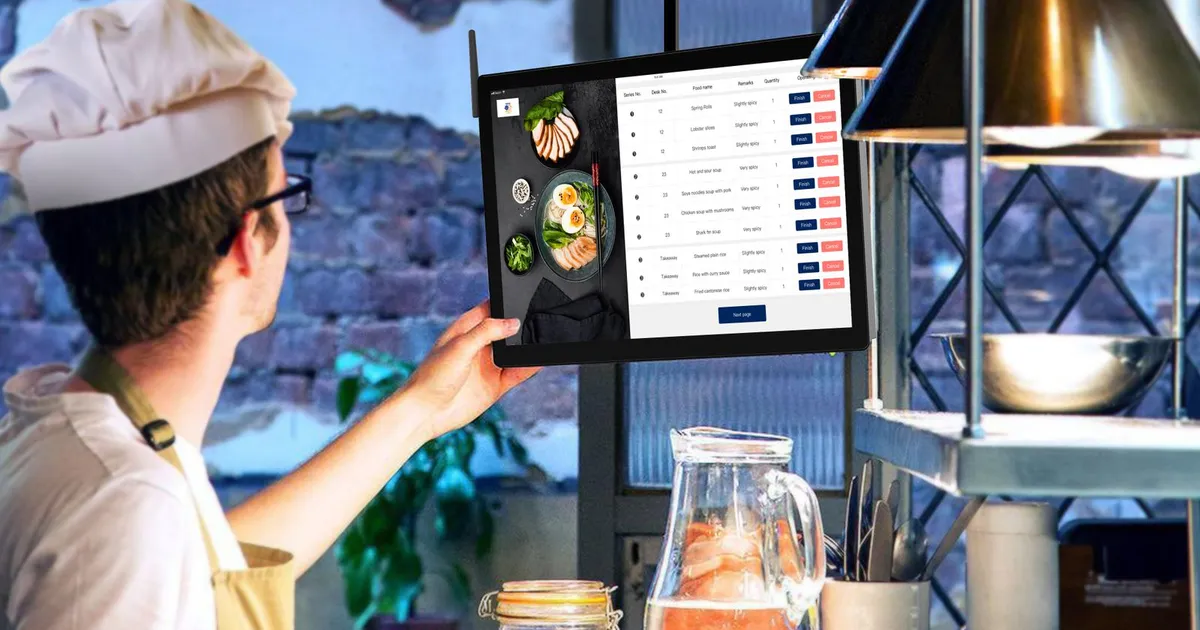
Most independent kitchens in the UK still run on a paper SFBB diary, and there’s nothing wrong with that in principle — it’s what the FSA designed. The question worth asking honestly is whether paper is still serving you, or just technically satisfying the requirement while quietly costing you rating points.
Where paper genuinely works
Paper has real advantages that shouldn’t be dismissed: no login, no app to learn, no dependence on wifi or a charged device, and every member of staff already knows how to use a pen. For a very small, stable team with one person consistently owning the diary, paper can work fine for years.
Where paper tends to break down
The failure mode is rarely dramatic — it’s small and cumulative:
- Illegible or inconsistent handwriting across different staff members, especially during a rush
- Retrospective filling in — a whole shift’s checks written up at once, hours later, from memory
- Physical damage — damp kitchens and paper diaries don’t mix well over months
- No alerts — if a fridge drifts out of range at 2am, nobody knows until someone happens to check
- Storage burden — years of paper records that legally need keeping, taking up physical space, hard to search if an EHO asks for a specific date
None of these mean the food was unsafe. They mean the evidence is weaker than the reality, which is exactly what costs hygiene rating points.
What digital actually solves — and doesn’t
A good digital food safety diary should:
- Make it faster to log a check than to skip it
- Timestamp entries automatically, so there’s no retrospective guessing
- Flag out-of-range readings immediately, not at the next inspection
- Keep an unbroken, searchable record an EHO can review in minutes
- Work offline during a service and sync later, since kitchen wifi is never fully reliable
What digital doesn’t solve on its own is a team that doesn’t want to do the checks at all — no app fixes a culture problem. But for teams who are already doing the work and just losing the paper trail, digital removes almost all of the friction.
The real comparison
| Paper | Digital | |
|---|---|---|
| Speed to log a check | Slower, needs a pen nearby | Faster, phone’s already in pocket |
| Consistency across staff | Varies by handwriting/habit | Standardised entry every time |
| Alerts on problems | None — found later, if at all | Immediate |
| Retrieval for an EHO | Manual searching through folders | Instant, filtered by date |
| Damage/loss risk | Real (damp, spills, misplaced pages) | Backed up automatically |
| Cost | Effectively free | Subscription cost |
Which one is actually right for you
If your diary is consistently, genuinely up to date and nobody’s ever had to guess a temperature after the fact — paper is doing its job. If you recognise any of the failure modes above, particularly the “filled in at the end of the shift from memory” one, that’s the clearest signal it’s time to move. It’s also worth reading what an EHO actually checks first — the format of your diary matters far less to them than whether it’s genuinely current.
Rated5 was designed specifically around the SFBB structure — not a generic checklist app — so the switch from paper doesn’t mean changing how you work, just how reliably it’s recorded. See how it maps onto your existing SFBB routine.