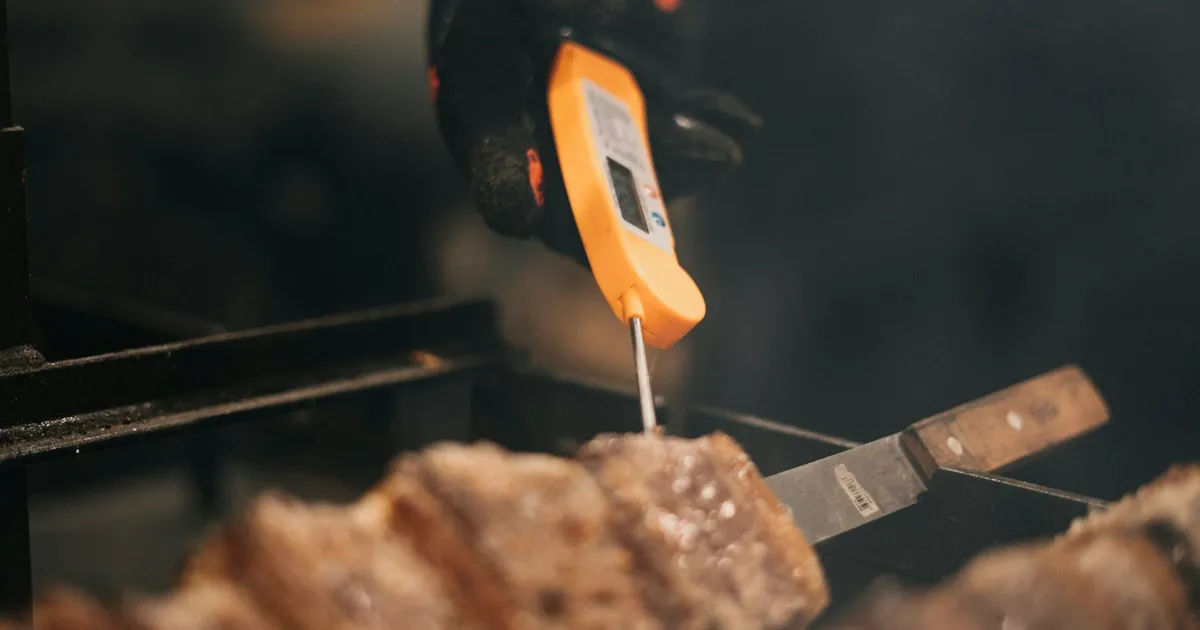
At some point, every kitchen has a check that fails — a fridge that’s crept up to 10°C, food that hasn’t reached temperature, a delivery that arrives already too warm. What separates a well-run kitchen from a risky one isn’t that this never happens. It’s what happens in the next five minutes, and whether it gets written down properly.
What a “corrective action” actually means
In SFBB and HACCP terms, a corrective action is simply the documented response to a check that’s out of range. It answers three questions: what went wrong, what you did about it, and how you made sure it wouldn’t just quietly happen again. An EHO isn’t alarmed by seeing a corrective action in your records — a completely spotless diary with never a single issue over months can actually look less credible, not more, which is exactly the kind of thing an EHO notices when comparing a suspiciously perfect diary against reality.
The general pattern to follow
1. Stop and isolate If it’s food — don’t use it, don’t serve it, move it out of the workflow immediately. If it’s equipment — stop relying on it until it’s checked.
2. Assess the risk How far out of range was it, and for how long, if you can estimate that? A fridge 1°C over for twenty minutes is a different situation to one that’s been failing for six hours.
3. Act This might mean discarding food, moving stock to a working fridge, recalibrating a thermometer, or calling an engineer. The right action depends on the specific failure — the point is that something concrete happens, not just a note that “we’ll keep an eye on it.”
4. Record it properly Every corrective action record should capture:
- What was checked and when
- What the reading or observation was
- What was done in response
- Who did it
- Any follow-up needed (engineer call booked, stock reordered, etc.)
5. Look for a pattern One fridge failure is a fridge problem. The same fridge failing three times in a month is a maintenance or replacement decision waiting to happen — and your records are what makes that pattern visible instead of just a string of unrelated one-offs.
The mistake most kitchens make
The most common gap isn’t skipping the fix — most staff instinctively act on a warm fridge or undercooked food. It’s skipping the write-up, because in the moment it feels like paperwork can wait until later. Later rarely comes, particularly on a busy shift, and the record ends up either missing entirely or reconstructed vaguely from memory days afterward — which is far less convincing to an EHO than a same-day entry logged on whatever diary format you’re actually using.
Why this matters more than the failure itself
A hygiene inspection doesn’t expect perfection. It expects evidence of a system that catches problems and responds to them. A kitchen with a clean corrective action trail is demonstrating exactly the kind of active food safety management the rating scheme is designed to reward — even though, on paper, “things went wrong here.”
Making the write-up as fast as the fix
Rated5 prompts staff through the right corrective action steps in the moment a check fails — rather than relying on someone remembering the full process under pressure — and keeps every entry as part of the permanent, timestamped record. See how corrective actions work in Rated5.